

How to use RYPLAZIM
Every 2-4 days, RYPLAZIM is given directly into the bloodstream through an intravenous infusion1*
Why do you need RYPLAZIM every 2-4 days?
RYPLAZIM temporarily replaces missing plasminogen in the blood.1


Maintaining proper dosing helps control lesions.2
Ask your doctor about which schedule is best for you.
You have options for how you can receive your treatment1
By yourself
if you have been taught how to infuse RYPLAZIM

By a caregiver
at home

By a nurse
at home or a healthcare facility, such as a hospital or clinic

Specialty pharmacy support helps manage product and infusion supply shipments for people who have been approved for at-home infusions. Your healthcare provider or specialty pharmacy will help set up the best care plan for your needs.
Do not take RYPLAZIM if you have had a severe reaction to RYPLAZIM or any of its components.
Before taking RYPLAZIM, tell your healthcare provider if you:
- Have had other medical problems, particularly bleeding problems.
- Use any medicine, including prescription and over-the-counter drugs, supplements, and herbal remedies.
- Have had reactions to any medications.
- Are pregnant or planning to become pregnant. It is not known whether RYPLAZIM may affect your pregnancy or an unborn baby.
- Are breastfeeding or are planning to breastfeed. It is not known whether RYPLAZIM affects milk production, passes into breast milk and may affect a baby.
RYPLAZIM is made from human plasma and therefore carries a risk of transmitting infectious agents, e.g., viruses, the variant Creutzfeldt-Jakob disease (vCJD) agent, and theoretically, the Creutzfeldt-Jakob Disease (CJD) agent.
If you have mucosal lesions in your respiratory tract, especially the tracheobronchial tree, and are treated with RYPLAZIM, respiratory distress may occur due to tissue sloughing. Tissue sloughing is the shedding of damaged tissue that happens as the body heals and is a normal response to RYPLAZIM. For this reason, it is recommended that your first infusion occur in a clinical setting to monitor for respiratory distress.
If your healthcare provider believes you would be able to infuse RYPLAZIM yourself or with the help of others at home, then you will receive detailed instructions and training on preparation and infusion.

Do not attempt an intravenous infusion on yourself unless you or your caregiver have been trained by a healthcare provider. Always follow the specific instructions that your healthcare provider has given you.
See the Instructions for Use in the full Prescribing Information about how to prepare, infuse, and store RYPLAZIM.
Your healthcare provider will tell you how often to take RYPLAZIM and how much RYPLAZIM to use each time.
Your healthcare provider may order periodic blood tests to check your plasminogen level.
Do not use RYPLAZIM for a condition other than that prescribed by your healthcare provider.
Do not share RYPLAZIM with other people, even if they have the same symptoms that you have.
Have questions about the infusion process or treatment with RYPLAZIM?
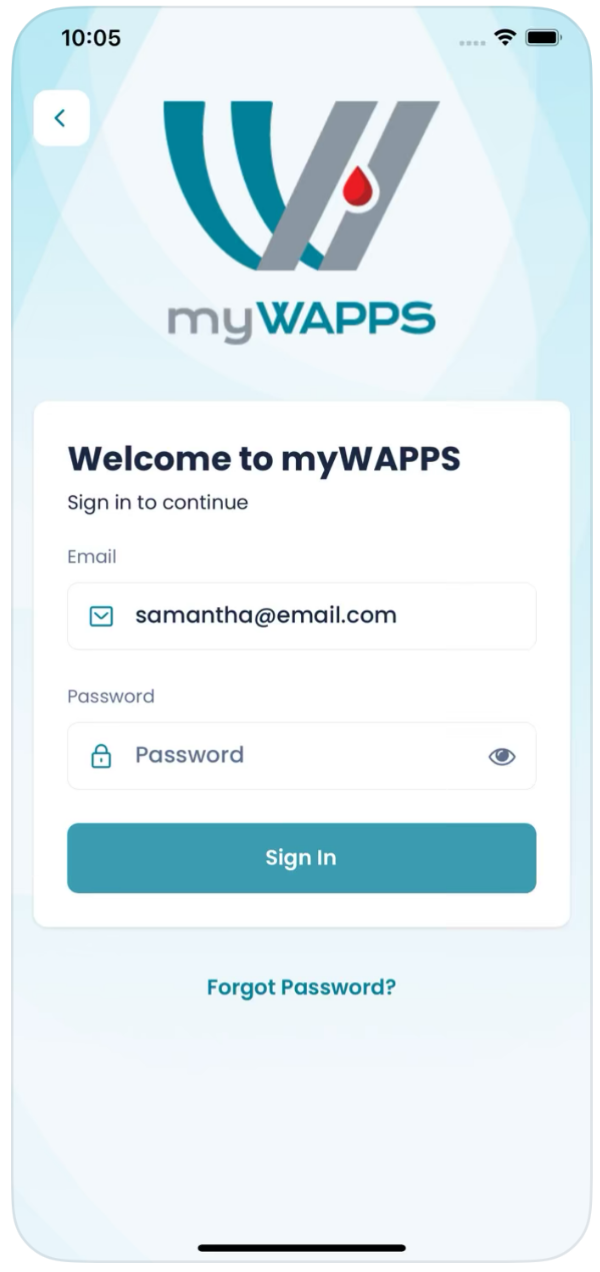
Ask your doctor about the myWAPPS app where you can3:
- • record and track infusions
- • see predicted activity level in real time
- • see estimated future levels
- • receive reminders when it's time for an infusion
- • receive notifications whenever levels drop to the low zone
APPROVED USE
RYPLAZIM® (plasminogen, human-tvmh) is used for the treatment of patients with plasminogen deficiency type 1 (hypoplasminogenemia).
IMPORTANT SAFETY INFORMATION
Do not use RYPLAZIM if you are a patient with known hypersensitivity to plasminogen or other components of RYPLAZIM.
- Bleeding: Use of RYPLAZIM may lead to bleeding at disease-related lesion sites or worsen active bleeding not related to disease lesions. Discontinue RYPLAZIM if serious bleeding occurs. If you are treated at a healthcare provider’s office or center, your healthcare provider will need to monitor you during the infusion and for 4 hours afterward, especially if you have a predisposition to bleeding or are taking anticoagulants, antiplatelet drugs, or other medications that may interfere with normal coagulation. If you infuse RYPLAZIM at home, you or your caregiver must also monitor you during and for 4 hours after the infusion under the same circumstances.
- Tissue Sloughing: If you have mucosal lesions in your respiratory tract, especially the tracheobronchial tree, and are treated with RYPLAZIM, respiratory distress may occur due to tissue sloughing. Please monitor appropriately.
- Transmission of Infectious Agents: RYPLAZIM is made from human plasma and therefore carries a risk of transmitting infectious agents, e.g., viruses, the variant Creutzfeldt-Jakob disease (vCJD) agent, and theoretically, the Creutzfeldt-Jakob Disease (CJD) agent. You should consult with your healthcare provider if you have any questions or concerns.
- Hypersensitivity Reactions: Hypersensitivity reactions, including anaphylaxis, may occur with RYPLAZIM. Immediately report any of the following signs or symptoms of an allergic reaction to your healthcare provider: swelling of the throat, tightness of the chest, low blood pressure, rash, nausea, vomiting, a tingling or pricking sensation, restlessness, wheezing or shortness of breath.
- Neutralizing Antibodies: Antibodies neutralizing plasminogen (also known as inhibitors) which can make the product less effective or ineffective, may form with the use of RYPLAZIM, although they were not observed in clinical trials. If clinical efficacy is not maintained (e.g., development of new or recurrent lesions), your healthcare provider will determine low levels of plasminogen in your plasma.
- Laboratory Abnormalities: Due to the activity of RYPLAZIM, you may have elevated blood levels of D-dimer that may interfere with screening for venous thromboembolism (VTE) using D-dimer levels.
- Adverse Reactions: The most frequent (incidence ≥ 10%) adverse reactions in clinical trials were abdominal pain, bloating, nausea, fatigue, extremity pain, hemorrhage, constipation, dry mouth, headache, dizziness, arthralgia, and back pain.
You may report side effects to +1(855)-353-7466 and US_Medicalinfo@kedrion.com or FDA at 1-800-FDA-1088 or www.fda.gov/medwatch.
For more details, please see full Prescribing Information and the Patient Information.
This site is intended for residents of the US only.
References:
1. RYPLAZIM [prescribing information]. Kedrion Biopharma Inc. 2024.
2. Shapiro AD, McDaniel H, Decker RW, et al. Safety and efficacy of long-term treatment of type 1 plasminogen deficient patients with intravenous plasminogen replacement therapy. Haemophilia. 2025;31(3):477-484.
3. What is myWAPPs? myWAPPs. Accessed February 5, 2026. https://mywapps.org